Starting out in my writing career writing competitions are means to get a bit of experience and some credibility. A way of potentially building some contacts and starting to create a publication history. However, most importantly, it is a means of validation. If you’re short or long listed, it is an acknowledgement that judges saw something in your work, which is a huge confidence boost as a writer. Each mark of approval gives us that little bit to keep on going. In most cases, though writing for competitions has a few unique challenges.
The word count
This is the most artificial element of writing for a competition compared to our own publication as these are firm parameters that can invalidate our entry. Now, there are a few generous competitions out there, and most of these also tend to have an open theme and accept almost any genre. This can be great, but it does mean that we are facing a larger number of competitors, which isn’t ideal for those of us just starting out. On the other hand, a lot of competitions seem to favour word counts between 1500 and 3000 words. The former especially eliminates anything descriptive or much in the way of character development. It means that the piece needs to be concise, focused, and potentially structurally creative to make the most out of every word.
Approaching this means starting with a firm plan. Understanding where we want the story to go overall and the key events or interactions, we want to show is the starting point. Once we have this, it’s possible to put together a draft. At this stage, don’t work to a strict word count but a rough approximation. My priority is a good story.
Now, once I have done a couple of versions and I am happy with the plot and characterisation, I started seriously looking at the word count. In most cases, I am a bit over at this point and need to cut. First, by looking at scenes or large sections of description that aren’t integral, perhaps just adding a little more to something I have already established. The next step will be looking at dialogue. Most of the time, my first version tends to be a little forced, so by making cuts, I often find it becomes a little more realistic. Hopefully, by now, I am close, and this is where I look at rephrasing to make things more concise. I am possibly looking to see where I can make changes to grammar and cut out a few conjunctions. At this stage, it gets tedious but needs must.
Writing to a theme
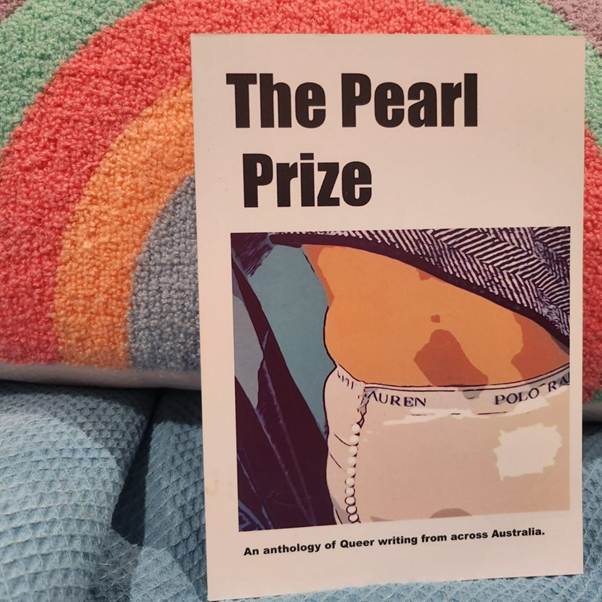
The other major challenge with competitions is often the theme. Sometimes, these can be very broad, like ‘Soul’, which led to my first published story, while others can be far more specific. Last years Pearl Prize focused on Queerness within the realm of AI and machine learning, which was much more specific. Personally, I find it much easier when the topic is broad as I can easily develop an idea that I’m passionate about to connect with the idea. In contrast, when it is specific, I need to really pull apart the theme and think more closely about the implications to generate a specific idea, in some ways I approach it a bit like an essay topic. This can still end up with a good story, but it does take more work. I have found as well that it takes more effort to engage and get passionate about the project this way as well. However, it does really depend on whether some people will look at a specific prompt or topic and just run with it while others may like the focus of a specific prompt. Regardless, these do narrow the world we can play in and place a degree of restriction, which can be frustrating.
Don’t lose sight of your reasons
Writing is about expression, and while we may get drawn into the quest for publication, it’s important not to lose sight of the reasons we pick up a pen. This may impact the competitions we choose to enter but also means sometimes it is good to write some purely to express ideas and emotions. Maybe just to explore different stories and ideas for our own enjoyment. It’s why I often publish a few different things here, whether it is some raw poetry or a fun little ghost story. It keeps me grounded and means I don’t lose the inspiration to write.
Read some more examples of my work here.