
Writing this for the Pearl Prize gave me some pretty clear guidelines for this story. The theme ‘Queerness’ beyond the ML and AI in (A) ARTifical space opened up a great raft of possibilities, but with only 1500 words, it was definitely a different sort of challenge. So, with the collection now available online and at the Vic Pride centre, I thought I would once again take you all on behind the seens look at my thought process.

Dealing with the word count
Normally, my writing style is reasonably descriptive and often attempts to really build a sense of atmosphere. This means that I quite easily get a pretty lengthy word count, or if things are short, there is not really that much plot development, rather focusing on a single event or interaction. However, this was not going to really work for the idea I had for the Pearl Prize as I needed to be able to establish a context, problem, and resolution arch.
Therefore, to achieve this, I need to approach the story somewhat differently. This meant focusing more on dialogue developing both the plot and characters through these interactions. It means that I almost don’t describe the setting at all except for a few key elements that are integral to the plot. It is definitely a slightly different style for me as I needed to focus on getting every line of dialogue right in order to make it feel like a real series of conversations the audience could imagine. This meant that I didn’t necessarily feel comfortable at times and doubted the finished product. However, it is perhaps under these conditions when I can do my best work.
Approaching the theme
Dicussing future technology like AI and machine learning was really exciting for me as a science fiction/ fantasy writer. However, I didn’t really want to go down too much into this style of writing as I really wanted the story to focus on community, plus I wanted it to seem connected to the present. As a result, the plot is based on the creation of a virtual world that uses machine learning to evolve continually and develop. The idea is that it would be a safe space for minorities especially the LGBTQIA and could grow into a utopia.
Things never really work out the way we hope, and technology is always curse by the imperfections of humans. We have seen this recently as online communities and social media have been taken over my misinformation and bigotry. There is nothing wrong with the concept of social media and the connection it creates but rather the willingness of people to abuse its power. The corruption of technology through human imperfect, therefore, became my primary focus and draws on those science fiction roots. Yet, I still wanted it to be more subtle than what we have seen with social media to fit better with the existing limitations of AI.
That is the fact that through learning from the available resources online, AI has become infected with certain biases. Perhaps the most obvious is the concept of gender expectations and roles. As such, I wanted the problem with my perfect virtual world not to be some rampet bigot or hacker, but the slow corruption of ingrained sub-conscious bias that everyone user would have. After all, it is these thoughts that we as a society need to recognise and address if we are to ever achieve proper equality.
The impact of capitalism
The secondary concept I have tried to tackle in Shadows of the Digital Dream’ was the role of capitalism. This is primarily shown through the character of Rob, who represents the investors and commercial interest in the project. At the start of the story, I was really quite explicit at pointing out how commercial opportunities can influence and really force changes on the development or creation of something new. In this, I have also chosen to highlight the opportunistic nature of virtual signalling by companies during Pride when it appears commercially beneficial as Jamie reflects on these common trends.

The second part of the story with the VR world under threats really highlights the urgency and panic that capitalism can create. The idea of a venture that costs significant investment to get off the ground is some that should seem common enough. Companies have always been quick to cut their losses or look to make radical changes in order to make things more profitable. In technology, this often includes putting in some sort of subscription fee or advertising. In truth, it seems to be an outside observer that companies will really embrace such options rather than attempt to fix the problem. This is where the influence of Jamie and Ray, both characters driven by different motivations for the project to succeed, are important. As it is after all their passion for the project and understanding of the problem, which encourages Rob to change.
The character of Rob himself is actually the central figure of the story. He must grow to really break the capailist mould. In the beginning, he is clearly trying to hold onto his old values despite his daughters transition and remains Jamie of the importance of commercial opportunities. However, his attempt to persuade Jamie that they might still achieve change is really a means to try and convince himself as much as Jamie. However, later, while Rob is still forced to be the voice of commercial interest, he has obviously recognised that the pressure of capitalism has actually created the issue, and his position is somewhat changed. The fact at the conclusion he is going to convince the investors rather than attempting to persuad Jamie is a start contrast to the start of the story. My biggest regret with Rob’s character arch was that in such a short story, I couldn’t really explore more about the relationship with his daughter and how this may influence this change.
A broad community
Unlike my story, ‘an inconsistent line’ I didn’t want this to narrow down to focus on trans experience. Instead, I felt like this needed to be a broad representation of community. I felt like this was important for the story with the central idea to create a VR safe space. However, in the context if the current political climate, I also wanted to highlight the importance of unity within the LGBTQIA+ community.
To achieve this, I first introduced characters that have a degree of ambiguity around their identity but also represent different groups within the community. Jamie, for instance, mentions coming out, but I deliberatly never state his identity so that he can purcived as gay, bi, trans or a host of other identities within the community. Meanwhile, while identifying Rob’s daughter as trans and use, they/them pronouns for Ray I never drill down further into their identities for this same reason. By establishing this broad representation, the second element is that Rob is dismissive of the whole community when he discusses the project, and as a cis heterosexual white male, he really just groups us all together. This was an important but subtle element. I wanted to highlight that from the perspective of outsiders, we are all the same.
Finally, I wanted to really show how this collective provides strength through the resolution. In some ways, it may seem a bit cliche, but the use of the Pride movement as a counter to the ingrained biases that are corrupting the VR world is deliberate. It is a force capable of undoing the damage because it is something that can unite us as a community as well demonstrate such a clear rejection of the issues affecting the virtual world.

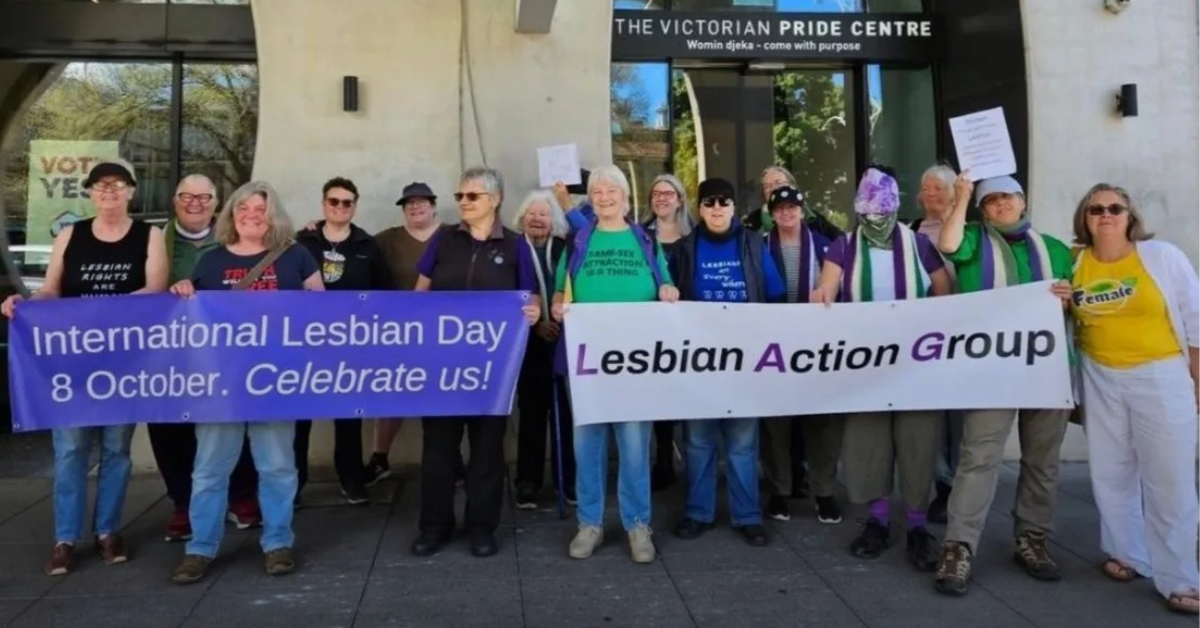
Shadows of the Digital Dream is published in the 2025 Pearl Prize collection available through Hares and Hyenas in the Vic Pride centre or online. I will also be publishing online as subscriper only content in the coming days.
Leave a Reply